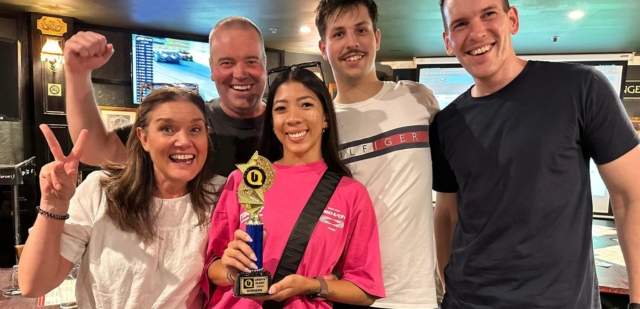

With restrictions having been lifted in Melbourne, we can finally gather the co-workers for an out-of-office social activity. But what do you do for such an occasion?
Pubs and restaurants are back in full swing, but is now really the time for the same old boring workplace dinner and drinks? What are the benefits of a team building event in comparison to a team outing?
Impact of Team Building: Insights from Research and Real-life Experiences
There have been many studies into the level of productivity brought into a company by team building activities. In a 2009 article called ‘Does Team Building Work?’ the authors determined that “team building has a positive… effect across all team outcomes” and “that team building was most strongly related to affective and process outcomes”.
In the book Team Building: Proven Strategies for Improving Team Performance the author stresses that “team building activities… made a significant difference in the organisation’s performance.” While there is a vast amount of well-researched studies on the benefits of team building activities, the best proof is the evidence you see first-hand with your co-workers.
It can be difficult to discern if your event should be classified as a team building activity or a team outing – both can be fun, both can involve alcohol and both will require a budget no matter how big or small.
However, we believe a simple team outing can only be elevated to a team building event with the following key factors:
1. At the centre, there is a clear problem-solving element
A singular challenge or task the team must work together to overcome.
2. There’s a focus on skill development
The task requires teammates to use and develop abilities that they may or may not have been aware of.
3. Often under pressure
Whether there is a time limit, a number to score or another team to chase, this is a healthy added pressure to test your staff and prepare them when the going gets tough.
4. All workers are split into small teams
What better way to improve your team working skills than by letting you work directly with others? Find out who’s the natural leader and who’s the workhorse in small cooperative groups
5. BONUS: Teams are picked strategically for better results
Do you want the marketing team to associate better with the IT team or want the up-and-coming person from accounts to see how they mesh with the people from business development? All are encouraged within team building activities.
6. Overall duration shouldn’t be too long or too short
Standard work drinks can drag on all night, and some other activities can be over in 15 minutes.
The ideal team building activity will run between 1-2 hours. Enough time to learn a new skill, form memories with teammates or accomplish a task without the event feeling like it’s dragging.
7. And finally, there are results
A team building event, unlike a social outing, should be able to give participants a complete idea of how they went, what they did well and what they can do better.
This gives you and your co-workers a great idea of their strengths and how to best utilise them within the company. A clear set of results also gives participants a clear goal to strive for at the next team building event and a clearer idea of how to accomplish it.
The Power of Team Building: Moving Beyond Social Outings Monotony
The effect of social outings on workplace unity has not been as thoroughly researched or studied. Anyone can understand the benefits of letting your hair down and trying to relax – but when does a social outing with your co-workers start to feel… pointless?
When no community goals are driving the team forward, a social out-of-work gathering can feel like the same monotonous cycle of pleasantries traded over the coffee station in the morning.
A company-wide get-together certainly has its place and depending on the size of the tab, can be a cost-effective evening out with the team. However with the drastic life changes brought on by COVID-19, office morale is at an all-time low.
Hear some insights on the subject from Chris, one of the team events experts here at Urban Quest:
So to genuinely bring everyone back into the office and remind the team of how productive they’ve been in the past, look no further than a properly designed and organised team building event to bring the team back in style.
If you’re looking for the perfect team activity to bring the best out of your workers when they come out from behind the computer screens, look no further than Urban Quest.
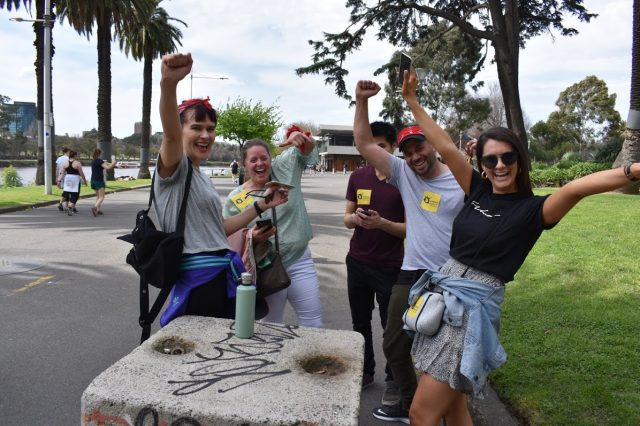
Urban Quest’s fully interactive city-wide Amazing Race is the most fun and high-tech challenge-based team building activity in Melbourne.
For workplaces large and small, there’s no Melbourne team event better at encouraging unity and productivity in your team than an amazing race with Urban Quest.
Resources:
http://jyd.pitt.edu/ojs/jyd/article/view/300
https://journals.sagepub.com/doi/abs/10.1177/1046496408328821