

Welcome to the world of team building activities Melbourne, where not all activities are created equal! With over 8 years of experience in the industry, we’ve navigated through the sea of team building options to bring you insider insights on how to avoid wasting your budget on lacklustre activities. In this guide, we’ll spill the beans on what to look for and what to avoid, ensuring your team building experience not only is enjoyable but also genuinely beneficial.
Navigating The Team Building Activities Melbourne Landscape
Let’s kick off our journey into the world of team building activities in Melbourne by adopting the same approach you would – starting with a simple online search. Using the phrase ‘team building activities Melbourne’ as the most popular searched term (according to Google), we encountered a myriad of diverse hits that required some serious head-scratching. However, fear not, we are holding your hand and guiding you through this maze that the current team building activities Melbourne landscape is!
Google Ads: To Click Or Not?
The first thing you see after you’ve hit that search button – those top-of-the-page ads tempting you to click on them. In the spirit of exploration, we took one for the team and clicked on each and every sponsored search result – all in the name of research, of course.
Spoiler alert: not all that glitters is gold. Our firsthand experience reveals how half of these ads led us astray, either to irrelevant web pages or pages asking for our contact details instead of providing any value.
We’ve learned that trusting organic results is a safer bet than dancing with the sponsored devil.

Guiding Stars: What to Look For in Google Reviews
Before we plunge into the nitty-gritty of what each team building activities provider brings to the table, the easiest and most widely accepted method is to scan for those golden stars and read through the experiences of previous customers. The rule of thumb is simple – the higher the rating, the better. It’s like having a backstage pass to the experiences of previous customers.
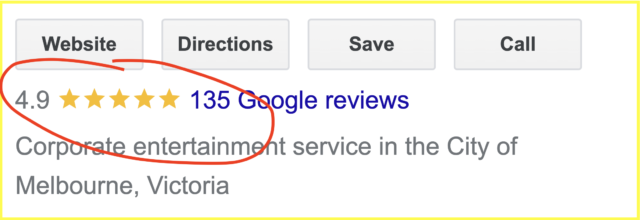

But here’s where the real magic happens: take a minute to dive into the actual reviews. We’re not just talking about the glowing ones; pay attention to the grumbles and groans too. More importantly, have a close look at the responses from the businesses themselves.
Why, you ask? Well, it’s a sneak peek into how the company interacts with its customers, and you can gauge whether it aligns with what you have in mind for your team. A responsive and attentive business is often indicative of a commitment to customer satisfaction.

So, as you embark on your quest for the perfect team building activity, let Google reviews be your trusty guide through the vast landscape of team building activities Melbourne options!
Digital Time Capsule: A Web Design Reality Check
Now, let’s talk about website design – a make-it-or-break-it aspect in today’s digital age. Picture this: stumbling upon a website that feels like a blast from the past, pre-WordPress era. If it looks like a relic, sounds like a relic, then expect the offered activities to be relic too!
Here’s a quick tip: if you land on a page drowning in text, it might make you want to make a swift exit.
Now, we get it – no one’s got time for a novel-length read. But here’s the deal: spend a few minutes skimming through the content. You might just save yourself from future headaches and confusion. If something seems out of line or sounds like complete gibberish – run, don’t walk!

Having a chuckle over nonsensical content might be fun, but it’s not what you’re looking for in the serious business of team building.
Hidden Truths: Decoding Website Visuals
Coming from this industry, we know a thing or two about selling the intangible. You might wonder, how do you market something that you can’t see, hear, smell or touch, namely service? Well, there are only two ways: words and visuals.
As we’ve seen in the section above, in this fast-paced world, not many have the luxury of time to dive deep into lengthy content. After all, seeing is often more convincing than hearing a hundred times. That brings us to the visuals on providers’ websites: photos and videos.
A note of caution here: if the photos look like they came straight from a stock collection, lack specific details, or seem totally out of place, it’s time to raise an eyebrow. You can often tell by their quality – outdated images have that unmistakable feel.
Stock images? Well, that’s a no-brainer.
Then there’s the classic move of showcasing Melbourne views to jazz up Team Building Melbourne Activities. Spoiler alert: sometimes, those views aren’t even of Melbourne – talk about creative geography!
We even stumbled upon a gem featuring Kookaburras with a description that left us scratching our heads. 🤔

And let’s not forget the cheesy factor – some photos just scream “photo shoot gone wrong.”
So, when you’re scanning through those snapshots, look for images that reflect true experiences and genuine emotions.
Visualizing Team Building: The Crucial Role of High-Quality Videos on Provider Websites
Videos, in particular, have the unique ability to transport potential clients into the heart of team building activities Melbourne, providing a dynamic and immersive preview of what they can expect. In a landscape where time is a precious commodity, a well-crafted video can convey the essence of a team building experience more effectively than paragraphs of text.
By investing in high-quality visuals, team building providers can bridge the gap between the intangible nature of their services and the tangible impact they have on teams. Engaging videos can showcase the genuine moments of connection, the laughter, and the collaborative spirit that define successful team-building activities.
In a world saturated with generic stock photos and outdated imagery, authentic and captivating visuals will not only capture attention but also build trust with potential clients.
A Curious Case of Contact Numbers
But the real fun begins when you discover a contact number that’s nothing more than a mobile number, especially for companies claiming to serve the entire country.

Here’s the scoop: relying solely on a mobile number for a nationwide service might raise an eyebrow or two. So, when you spot those mobile digits, consider it a playful hint that the provider might need to update their contact strategy to match the grand scale of Australia. After all, team building knows no bounds!

The Pitfalls of Aggregator Websites and Listicle Articles
Now, let’s chat about aggregators – those websites teaming up with lots of local providers. They take the bigger chunk of the first page results. Be careful when booking through them because these middlemen may cost you extra without any assurance of quality or accountability for the activities they offer. Keep your eyes peeled and consider going straight to the source for a smoother team building journey.

There is also another type of web pages that flood the scene – those loaded with team building activities claiming to be the crème de la crème in Melbourne, or this year, or for your team specifically, and so on. These are blog articles, also called listicles (as they are essentially articles in the form of lists) crafted by media outlets aiming to snag the top spot in search results and bring heaps of traffic to their websites.
We’ve peeked behind the curtain and worked with some of these. Here’s the scoop: once they secure that prized first-page spot on Google, they turn into money-making machines. How? By selling spots within the article, and the higher up you go, the pricier it gets. It’s basically like Google Ads but in disguise.
So, when you’re scrolling through these articles, see how reputable the website is, keep an eye out for the masked money trail and consider if the recommendations are genuine or just strategically placed pay-to-play suggestions.

Team Building Buffet: Watch Out for the All-in-One Providers
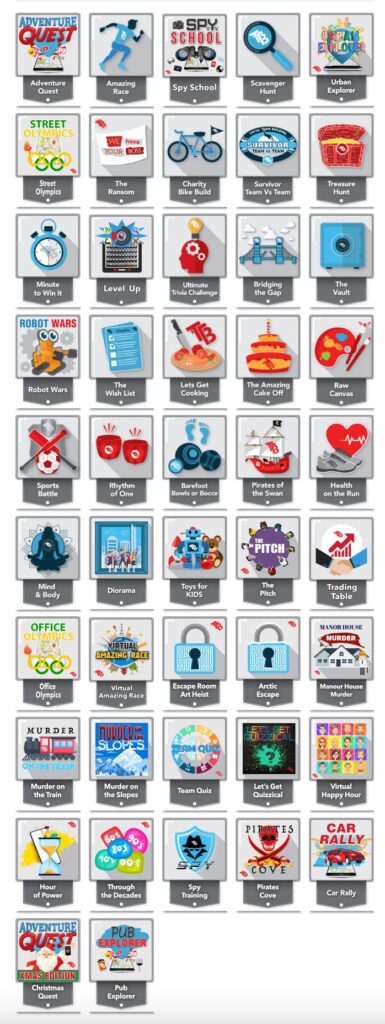
We talk about the providers who claim to do it all – offering a ton of different activities. But, here’s the catch: be cautious. It looks like they’re trying to be good at everything, but often, they end up being masters of none.

Plus, navigating through a sea of activities to pick the right one can be a real puzzle. Something tells us many of those activities might just be variations of the same thing, parading under different names to make the numbers look impressive.
So, tread carefully and consider if simpler might be better when it comes to your team building activities Melbourne options. Quality over quantity, always.
Cracking the Time Code: The Ideal Duration for Team Building Events
Now, let’s turn our attention to the ticking clock of team building events – an aspect we’ve mastered through running tens of thousands of them. When it comes to event duration, we’ve got the secret sauce.
In our seasoned experience, we’ve learned that exceeding the 2-hour mark is like testing the limits of fun. We’ll even go a step further and declare 1.5 hours as the golden time limit. If you spot a provider pitching their events as 2-3 hours, consider it a red flag. Our thorough competitor research shows that more time often means more downtime during the experience.

Here’s our philosophy: we believe our customers aren’t paying for the minutes spent idling around; they’re investing in the moments of pure engagement with our team building experience. So, when you’re on the hunt for the perfect activity, keep an eye on that clock, and let the sweet spot of 1.5 hours (the actual engagement time, excluding pre- and post-event formalities) be your guiding light.
It’s not just about time; it’s about maximising every moment for a memorable team building journey!
Picture Perfect: Decoding the Visual Language of Team Building
Let’s also take a look at how team building activities Melbourne appear visually. We might not have to spell it out for you, but here’s the scoop: if a provider’s gallery is filled with staged photos, tacky challenges, or downright cheesy activities from their past events, it’s time to consider making a swift exit.
We get it – maybe you’re someone who doesn’t mind donning a headband during a team building activity. But here’s the reality check: trust us, the majority of your colleagues won’t be on board with that level of silliness. The last thing you want is eye-rolls.
In the world of team building, visuals speak volumes. So, when you’re scouting for the ideal provider, pay close attention to their photo gallery. Opt for an experience that not only aligns with your expectations but also showcases moments that will have your team buzzing with enthusiasm, not cringing at the memories.
After all, the goal is to create an atmosphere where everyone can participate with genuine excitement – no headbands required!
The Tech Revolution: Say No to Paper Clues!
Now, let’s talk about the amazing race-style activities – you know, the ones that can be super awesome for building teamwork if done right. But here’s the thing: pay close attention to how they deliver the experience.
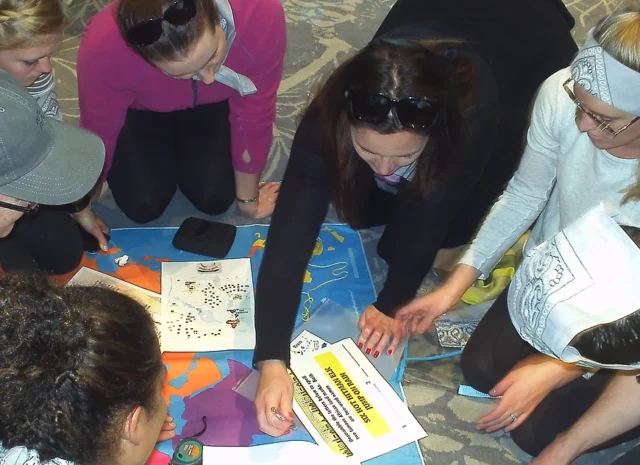
If they mention stuff like paper clues, task sheets, clipboards, or any old-school printed materials, it’s a red flag. In this day and age, if these activities aren’t using technology, it’s a sign they might not be up to par in the team building game. Plus, think about the environmental side – all those papers and printouts create a ton of waste after each event.
So, if it’s not tech-friendly and sustainable, it might be time to explore other team building avenues.
Team Building vs. Team Bonding: Drawing the Line
Differentiating between team building, team bonding, and even team outing is crucial. We elaborate on the distinctions, emphasizing the importance of combining both experiences for a well-rounded team building approach. While team building focuses on reaching specific goals, team bonding emphasises quality time and fostering interpersonal relationships. A balance of both is key for a harmonious team dynamic.
These terms are often used as synonyms. However, team building is not the same as team bonding. To pick activities that your team will genuinely benefit from, you should be aware of the difference. Both experiences are equally important and can be combined. The rule of thumb here is that good team building activities Melbourne always involve some degree of team bonding, but not the other way around.
Team building: The clear focus of team building is to develop your team to reach a certain goal.
Team bonding: The focus here is on quality time between colleagues. These activities are usually less focused on work, and more on fostering interpersonal relationships while doing something enjoyable. To put it simply, they bring people together. Keeping your employees happy will make them more likely to stay at your company, take less time off, and actively work towards improving work processes.
So, what’s your goal for your team: to grow, to bond or just to have a fun time together?
Physical vs. Mental: The Heart Of Team Building Activities
We take a unique approach by categorising team building activities Melbourne based on the physical or mental elements involved. Physical activities often present limitations, such as varying fitness levels and skill requirements, hindering true teamwork. Mental-based activities, on the other hand, encourage problem-solving and communication without such constraints.
This insight leads us to the conclusion that certain activities like cooking and bowling might not qualify as team building but rather as enjoyable leisure time. Sorry, painting and drumming, you are fun, but you are not for team building!

Qualifying the Inquiry Stage: Your Online Trail to Service Quality
You’ve found a suitable team building activity option, and now it’s time to inquire. Here comes another crucial insight: consider the journey of exploring a provider’s website as a sneak peek into what the team building experience could be like.
Think about it – a well-designed, user-friendly website often mirrors a provider’s commitment to excellence. If the site is seamless, easy to navigate, and provides a pleasant experience, chances are their services might follow suit. On the flip side, if the website feels outdated, clunky, or frustrating to use, it could be a red flag.
Your online journey isn’t just about clicking buttons – it’s a prelude to the team building adventure you’re considering. So, pay attention to the digital clues, and let the provider’s website be your compass to a smooth and enjoyable team building experience.
Conclusion
Armed with our insider knowledge, you’re now equipped to choose team building activities Melbourne that go beyond mere fun and games. Opt for activities that are not only enjoyable but also effective in fostering teamwork, communication, and problem-solving. This guide ensures your budget is an investment in your team’s growth, leaving your team with high-fives instead of eye-rolls.
Happy team building!